
Solar control window films are engineered to manage solar radiation within the 300 nm to 2500 nm wavelength spectrum. This range encompasses three primary bands, each contributing differently to total solar heat gain:
1. Ultraviolet (UV) Radiation: 300 nm – 400 nm
Heat Contribution: Approximately 3% of total solar energy.
Performance: It is the primary cause of skin damage and the fading or aging of interiors (upholstery, furniture, flooring). Premium solar films typically offer over 99% UV rejection.
2. Visible Light: 400 nm – 780 nm
Heat Contribution: Approximately 44% of total solar energy.
Performance: Heat rejeciton films balance safety and thermal insulation by adjusting visible light transmission (VLT). For instance, windshield films must maintain high light transmission—typically required to be above 70%—to ensure safety, whereas side and rear window films can reduce light transmission (such as by using darker films with 15%–35% VLT) to block heat carried by visible light and enhance privacy.
3. Infrared Radiation (IR): 780 nm – 2500 nm
Heat Contribution: Approximately 53% of total solar energy.
Performance: This is the dominant source of thermal radiation and heat buildup. Premium high-quality heat insulation films ,such as nano-ceramic films or magnetron-sputtered l films reflect or absorb a high proportion of this wavelength range, thereby significantly lowering the perceived temperature without compromising visibility. Top-tier products achieve Infrared Rejection (IRR) rates can up to 99%.
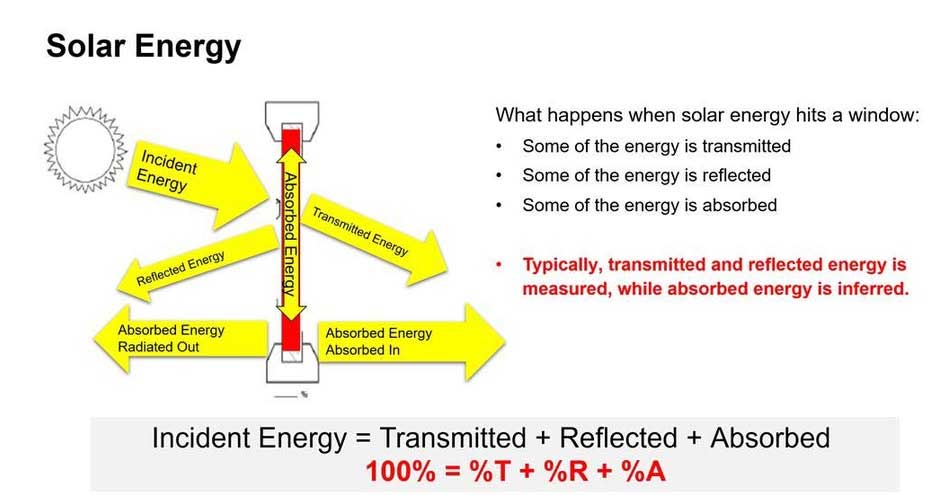
Key Metric: Total Solar Energy Rejection (TSER) Of Solar Control Window Films
When evaluating film performance, consumers should look beyond standalone IRR percentages. The most accurate scientific metric is the Total Solar Energy Rejection (TSER).
TSER calculates the comprehensive heat-blocking capability across all three bands (IR 53% + Visible 44% + UV 3%). A higher TSER value indicates superior overall thermal insulation. Generally, a film with a TSER above 50% will deliver a significant and perceptible cooling effect.