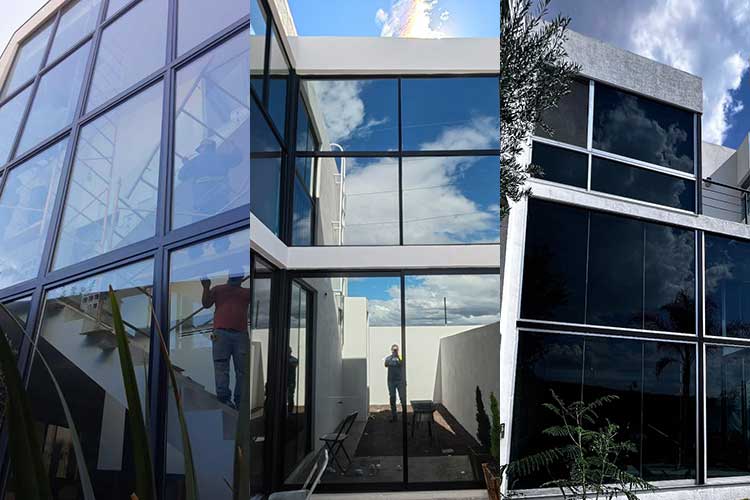
Magnetron nano ceramic film is a type of window film that uses nano ceramic particles deposited using magnetron sputtering to achieve its properties. Magnetron sputtering is a thin-film deposition process where a target material is bombarded by energetic ions in a vacuum chamber. This knocks atoms off the target, which then condense on a substrate to form a thin film.This process produces films that are extremely precise, durable, and efficient.
The result is a very high-quality product, but at a cost significantly higher than that of nano-ceramic films or classic ceramic films. Magnetron window films are typically installed in luxury offices, high-rise office buildings, showrooms, or executive suites where maximum transparency and heat insulation are required.
The principle of magnetron sputtering is like an ‘atomic-level spraying technology’: in a high vacuum environment, high-energy particles bombard a target made of the desired material, knocking out atoms from the target and allowing them to deposit evenly on the substrate surface to form a thin film. The target directly determines the properties of the thin film: using a metal target results in a metal film; using a ceramic target (such as ITO, IGZO, and other oxides) naturally results in a nano-ceramic film.
Here are some of the benefits of using magnetron nano ceramic film:
Blocks infrared radiation, reducing heat gain
Allows visible light to pass through, maintaining clarity
Rejects UV rays, protecting people and furniture from sun damage
Magnetron nano ceramic film is a relatively new technology, but it is becoming increasingly popular due to its many benefits. It is a good choice for window film applications in homes, businesses, and automobiles.